Austin Heat, and Staying Hydrated
Summer here runs long, and plenty of plans happen outside anyway. Here's what the weather records say, the warning signs of heat illness, and where a drip fits and where it doesn't.
Your first drip starts with a $26.99 video visit. By booking, you agree to our Service Terms.
How Hot Austin Gets
The National Weather Service's Austin temperature record runs back to 1897, and since 1999 it has been kept at Camp Mabry. A few numbers from it:
- About 98°F. That's the average August high in the weather service's normals for Camp Mabry. September's average high is still above 90°F.
- 90 days. The most days that reached 100°F in a single year, set in 2011. Second place goes to 2023, with 80.
- 45 days in a row. Austin's longest run of 100-degree days, from July 8 to Aug. 21, 2023.
- Oct. 13, 2024. The latest 100-degree day in the record, when it hit 101°F.
From the National Weather Service Austin/San Antonio office: temperature rankings, monthly normals, and the station history for Camp Mabry.
Where the Heat Catches People
Dawn on the Butler Trail
The Butler Trail runs a 10-mile loop around Lady Bird Lake, and summer runners learn to go early. CDC's advice for exercising in heat: work out earlier or later in the day, drink more water than usual without waiting until you're thirsty, and if you feel faint or weak, stop and get somewhere cool.
September Game Days at DKR
Longhorns tailgates outside DKR-Texas Memorial Stadium in September mean hours on hot pavement, and September's average high is still above 90°F. For long stretches outside, CDC's advice is to stay in the shade when you can and take breaks.
ACL at Zilker Park
ACL fills Zilker Park for two weekends in early October. That's usually past the worst of summer, but Austin hit 101°F on Oct. 13, 2024. CDC suggests going easy on alcohol, caffeine, and sugary drinks when it's hot.
A Day on Lake Travis
A boat day on Lake Travis is hours in full sun, so pack water along with everything else in the cooler, the way CDC suggests carrying it on any hot day. If you want a drip, plan it back at the rental, never on the boat.
Who Should Be Extra Careful
Heat can make anyone sick. CDC lists groups at higher risk:
- Adults 65 and older
- Infants and young children
- People with chronic medical conditions, such as heart disease or asthma
- People who are pregnant
- People who exercise or work outdoors in the heat
- People without air conditioning at home
Medicines matter too. CDC notes that many medicines can leave you dehydrated or overheated on hot days, and it says not to stop or change a medicine until you've talked with your doctor.
Know the Warning Signs
Dehydration
MedlinePlus lists feeling very thirsty, a dry mouth, urinating and sweating less than usual, dark urine, dry skin, feeling tired, and dizziness. Get medical help right away if any of those come with confusion, fainting, no urination, a racing heartbeat, or rapid breathing.
Heat Exhaustion
The National Weather Service lists heavy sweating; weakness or tiredness; cool, pale, clammy skin; a fast, weak pulse; muscle cramps; dizziness, nausea, or vomiting; headache; and fainting. Move the person somewhere cooler, loosen their clothing, use cool wet cloths, and offer sips of water. Get medical attention right away if they vomit, or if symptoms get worse or last longer than an hour. CDC's workplace guidance goes further and sends anyone with heat exhaustion for a medical evaluation.
Heat stroke: call 911
CDC calls heat stroke the most serious heat-related illness. The weather service's signs: a throbbing headache, confusion, slurred speech, a body temperature above 103°F, hot red skin that's dry or damp, a rapid strong pulse, fainting, or passing out.
Call 911 right away. While you wait, move the person somewhere cooler and cool them with wet cloths. The weather service says not to give fluids. Chest pain or trouble breathing is a 911 call too.
When Water Is Enough
On most hot days, the plan is water, shade, and breaks. CDC suggests drinking and refilling a water bottle all day, and checking the color of your urine: light yellow or clear usually means you're drinking enough.
MedlinePlus says mild dehydration may need nothing more than plenty of water, and that sports drinks may help if you've lost electrolytes. It also notes that severe cases may need IV fluids in a hospital. That's hospital care, and a mobile drip is no stand-in for it.
A Drip on a Hot Day
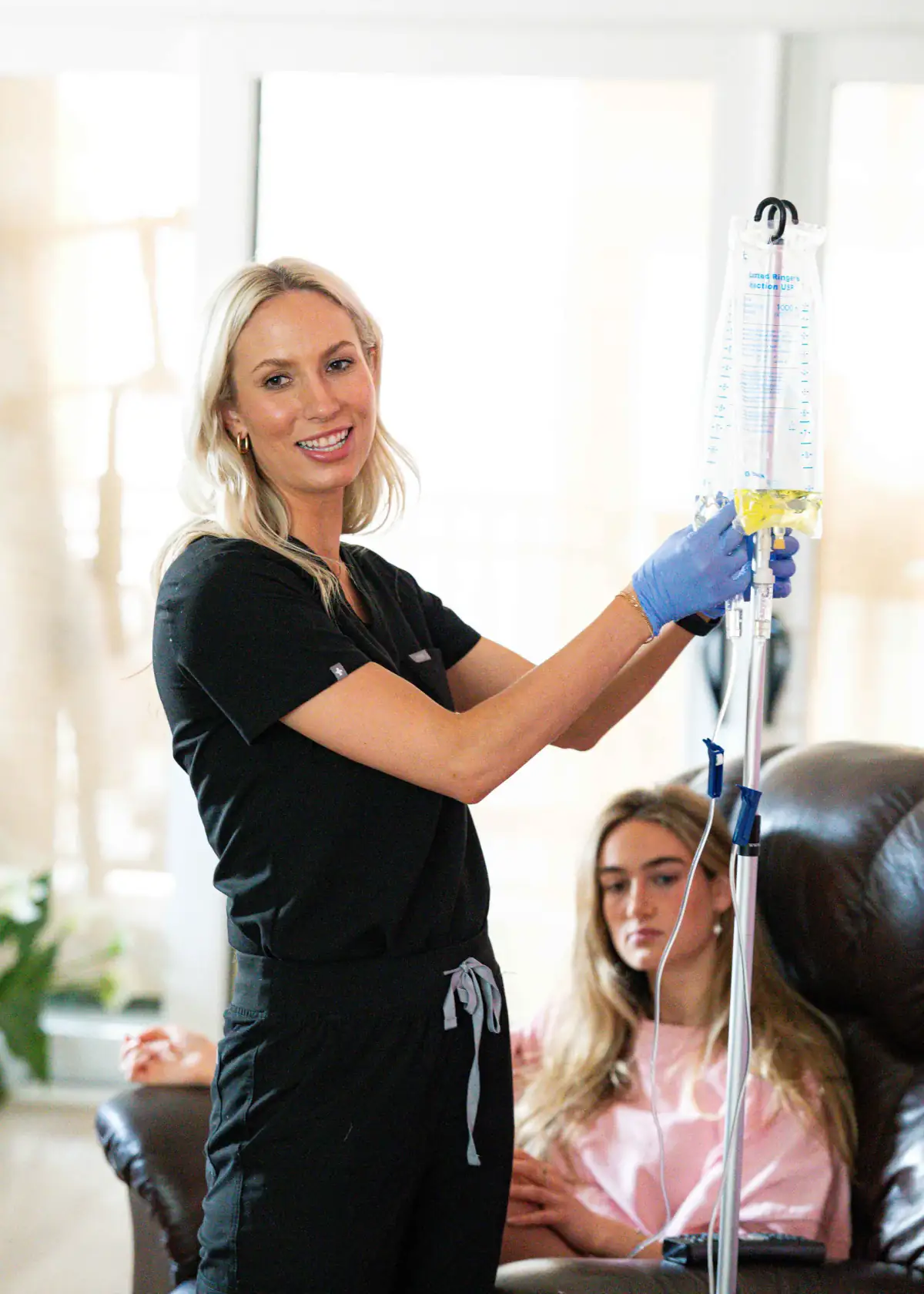
A drip from us fits an ordinary hot day, or the morning after one, when nobody has the warning signs above. It supports hydration. It doesn't take the place of 911, a doctor, or an emergency room.
If fluids and electrolytes are all you want, The Baseline is $185. The Myers Cocktail adds vitamins to the fluids for $250.
Your first drip with us starts with a $26.99 video visit with a licensed provider, so a drip takes some planning. That's one more reason it's never the move for someone who's overheating right now. Our how it works page walks through the visit.
Planning around a big weekend? See our pages on ACL Fest and Longhorns game days, or browse Austin's whole calendar on our events page.
Heat and Hydration Questions
How hot does Austin get in summer?
National Weather Service normals put the average August high at about 98°F, and September's average high is still above 90°F. In 2011, Austin logged 90 days that reached 100°F or more, the most in its record.
What are the signs of heat stroke?
The National Weather Service lists a throbbing headache, confusion, slurred speech, nausea, dizziness, a body temperature above 103°F, hot red skin that's dry or damp, a rapid strong pulse, fainting, and passing out. Heat stroke is an emergency, so call 911.
Should I book a drip for heat exhaustion?
No. Get the person somewhere cooler. The National Weather Service says to get medical attention right away if they vomit, or if symptoms get worse or last longer than an hour. A drip from us isn't medical care for heat illness.
Is drinking water enough on a hot day?
Usually, yes. MedlinePlus says mild dehydration may need nothing more than plenty of water, and sports drinks may help if you've lost electrolytes. CDC suggests carrying a water bottle and refilling it through the day.
When does a drip make sense in the heat?
On an ordinary hot day, when nobody has warning signs of heat illness and you'd like fluids at home. A drip supports hydration. Your first one starts with a $26.99 video visit with a licensed provider, so it takes a little planning.
Where These Facts Come From
- National Weather Service Austin/San Antonio: Austin Area temperature rankings (PDF)
- National Weather Service Austin/San Antonio: Austin Camp Mabry monthly normals (PDF)
- National Weather Service Austin/San Antonio: Camp Mabry station history (PDF)
- National Weather Service: Heat Cramps, Exhaustion, Stroke
- CDC: About Heat and Your Health
- CDC: People at Increased Risk for Heat-Related Illness
- CDC: Heat and Athletes
- CDC NIOSH: Heat-related Illnesses
- MedlinePlus: Dehydration
Each source was opened and checked on October 9, 2026. This guide is general information, not medical advice.
Fluids at Home, Booked Ahead
Visits run every day from 8 AM to 10 PM. If someone shows signs of heat stroke, skip the booking and call 911.
Book a Dripor call or text (512) 765-3335Your first drip starts with a $26.99 video visit. By booking, you agree to our Service Terms.